

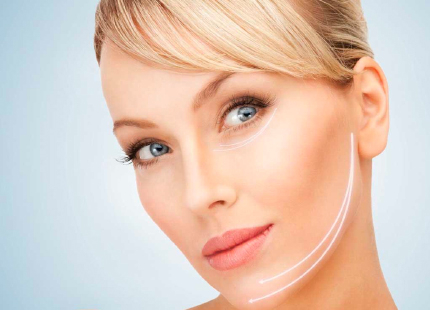
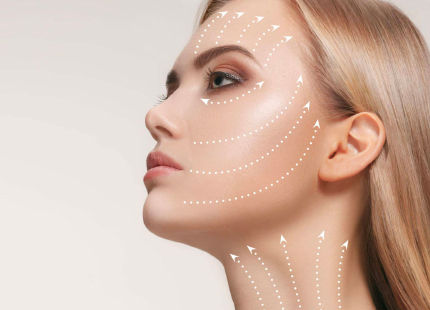
Buccal fat removal is a small operation with permanent consequences. What it does, who it suits, why age matters, and why it is the wrong choice for many people who ask for it.
Discover our Plastic, Reconstructive and Aesthetic Surgery Office




Bichectomy, known in English as buccal fat removal, has been one of the most requested facial procedures of recent years. It is a short operation, it leaves no visible scar, and social media has made the sculpted mid-face it produces extremely visible. It is also, in my view, one of the procedures most often requested by people it does not suit.
Because the fat pad does not grow back, this is a decision worth understanding properly before making it.
The buccal fat pad is a discrete, encapsulated pad of fat sitting deep in the cheek, between the facial muscles. It is not the same as the subcutaneous fat just under the skin, and it is not fat that responds to diet or exercise. It has its own structure and its own blood supply, and it sits close to important structures including branches of the facial nerve and the parotid duct.
Its size varies considerably between individuals, which is why some people have full lower cheeks at a low body weight while others do not.
Through a small incision inside the mouth, on the inner cheek, a portion of the pad is identified and removed. There is no external incision and therefore no visible scar. The operation is usually performed under local anaesthesia, sometimes with sedation, and takes around thirty to forty-five minutes.
The effect is a hollowing of the lower cheek and a more defined transition between the cheekbone and the jawline. It is a subtle change in most people, and it becomes apparent gradually as swelling resolves over several weeks.
What it does not do is define the jawline itself, tighten loose skin, or reduce the size of the face overall. Patients who want those things need a different conversation.
In my practice the patients who do well share a fairly narrow profile:
This is the single most important thing to understand about buccal fat removal, and it is the part most often left out.
The face loses volume with age. The fat compartments shrink and descend, and the mid-face hollows naturally over the decades. Removing buccal fat in your twenties accelerates a change that is going to happen anyway. A face that looks sculpted at twenty-eight can look gaunt and prematurely aged at forty-five.
The fat does not return. Restoring lost mid-face volume later means fillers or fat grafting, and neither reproduces the original anatomy exactly. I would rather discuss this before the operation than afterwards.
I turn down a meaningful proportion of the bichectomy requests I receive, and almost always for one of these reasons. It is not a difficult operation to perform. It is a difficult operation to reverse.
The proximity of important structures is what makes surgical experience matter in an operation that otherwise sounds trivial:
Over-resection is the complication I see most often in patients who come to me afterwards. Removing more is always possible later; putting it back is not straightforward.
Chewing is uncomfortable initially, and hot, hard and spicy foods are avoided in the first days. Smoking materially impairs healing of an intraoral wound.
This procedure travels reasonably well. It is short, performed under local anaesthesia in most cases, and the flight-related risks are lower than for major body surgery.
The parts that require planning are the assessment and the aftercare. Assessment matters more here than for most procedures, because the main risk is not surgical complication but being a poor candidate in the first place, and that can only be judged by examining your face, your skin quality and your facial proportions in person.
Aftercare is straightforward but specific: oral hygiene, soft diet, and a review of the incision. Swelling continues for weeks after you are home, so agree in advance how progress will be reviewed remotely.
More than any other procedure I perform, bichectomy requests arrive with a photograph of someone else attached. The result you are looking at is that person's anatomy, their bone structure, their skin and often their lighting. It is not a template.
If you are considering this operation, the useful step is an examination that establishes whether the fullness you dislike is buccal fat at all, and what your face is likely to look like in twenty years if that fat is removed now. Sometimes the answer is that this is exactly the right procedure. Often it is not.
No. The removal is permanent. This is the main reason the decision deserves careful thought, particularly in younger patients, because the face continues to lose volume naturally with age.
No. The incision is inside the mouth on the inner cheek, so there is no external scar.
The change becomes visible from around week three as swelling resolves, and the final result is generally at three to six months. In the first days the cheeks often look fuller rather than slimmer.
Not directly. It hollows the lower cheek and improves the transition from cheekbone to jaw, but it does not sharpen the jawline itself or tighten loose skin. If the jawline is your main concern, a different assessment is needed.
The operation is short but the pad sits close to branches of the facial nerve and the parotid duct. Serious complications are rare in experienced hands. The most common problem I see is over-resection, which is difficult to correct.
Age itself is not a barrier, but the younger you are the more important it is to consider how your face will change over the following decades. Removing volume early can contribute to a gaunt appearance later.
This is decided at an in-person check. Bichectomy carries lower flight-related risk than major body surgery, but the incision should be reviewed before you travel, and oral hygiene instructions must be followed carefully afterwards.



 MAKE APPOINTMENT